Laser Tattoo Removal in Baton Rouge at Derma
Sometimes a tattoo no longer fits where you are today. Whether your goal is complete removal or lightening a tattoo for a future cover up, laser tattoo removal offers an established approach to gradually fading unwanted ink.
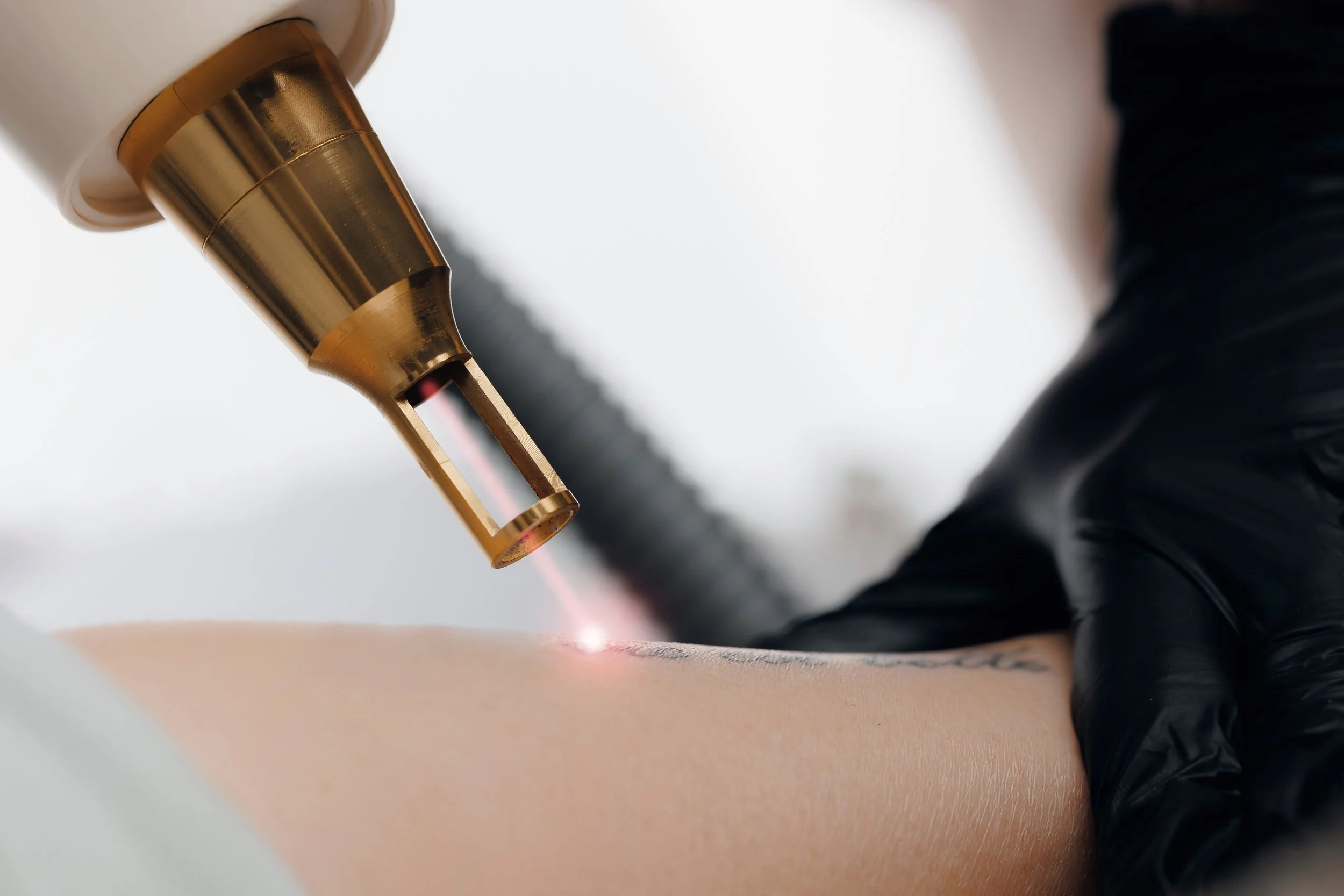
Every tattoo is different, and treatment depends on factors such as the ink color, depth and age of the tattoo, its location, and your skin tone. At Derma, treatment begins with a thorough evaluation of your skin and tattoo so your provider can determine an appropriate treatment approach and help you understand what to realistically expect.
Call 225-303-9500 to Learn more!
What is Laser Tattoo Removal?
Laser tattoo removal uses very short pulses of concentrated light to break tattoo ink into smaller particles. The ink absorbs the laser energy and fragments, while the surrounding skin is largely spared.
Over the following weeks, your body gradually clears those fragments through its natural immune process. Each session breaks down more ink, which is why a tattoo fades in stages over a series of treatments rather than disappearing in one visit.
Every tattoo responds differently to laser treatment. Black and dark inks typically respond best, while some colors, including certain greens, blues, and yellows, can be more resistant. Cosmetic tattoos and permanent makeup require special consideration because some pigments can react unpredictably to laser treatment.
What it Treats:
Patients are commonly evaluated for laser tattoo removal to address:
Professional tattoos they no longer want
Amateur or homemade tattoos
Tattoos they want lightened before a cover-up
Names, dates, or symbols tied to a past chapter of life
Tattoos in visible areas such as the hands, neck, or forearms
Partial removal, to correct or refine one part of a larger piece
Why Choose Tattoo Removal
at Derma
Tattoo removal is a skin procedure, and results depend on how well the treatment is matched to your skin. At Derma, your treatment begins with a consultation with Jen, who will evaluate your skin and tattoo to help determine an appropriate treatment plan. The tattoo removal sessions are performed by an experienced laser technician with more than twenty years of experience.
Factors such as skin tone, a history of scarring or keloids, sun exposure, and certain medications can influence how treatment should be approached. Our team takes these details into account, with your skin and goals in mind rather than following a one size fits all approach.
Does laser tattoo removal
leave scars?
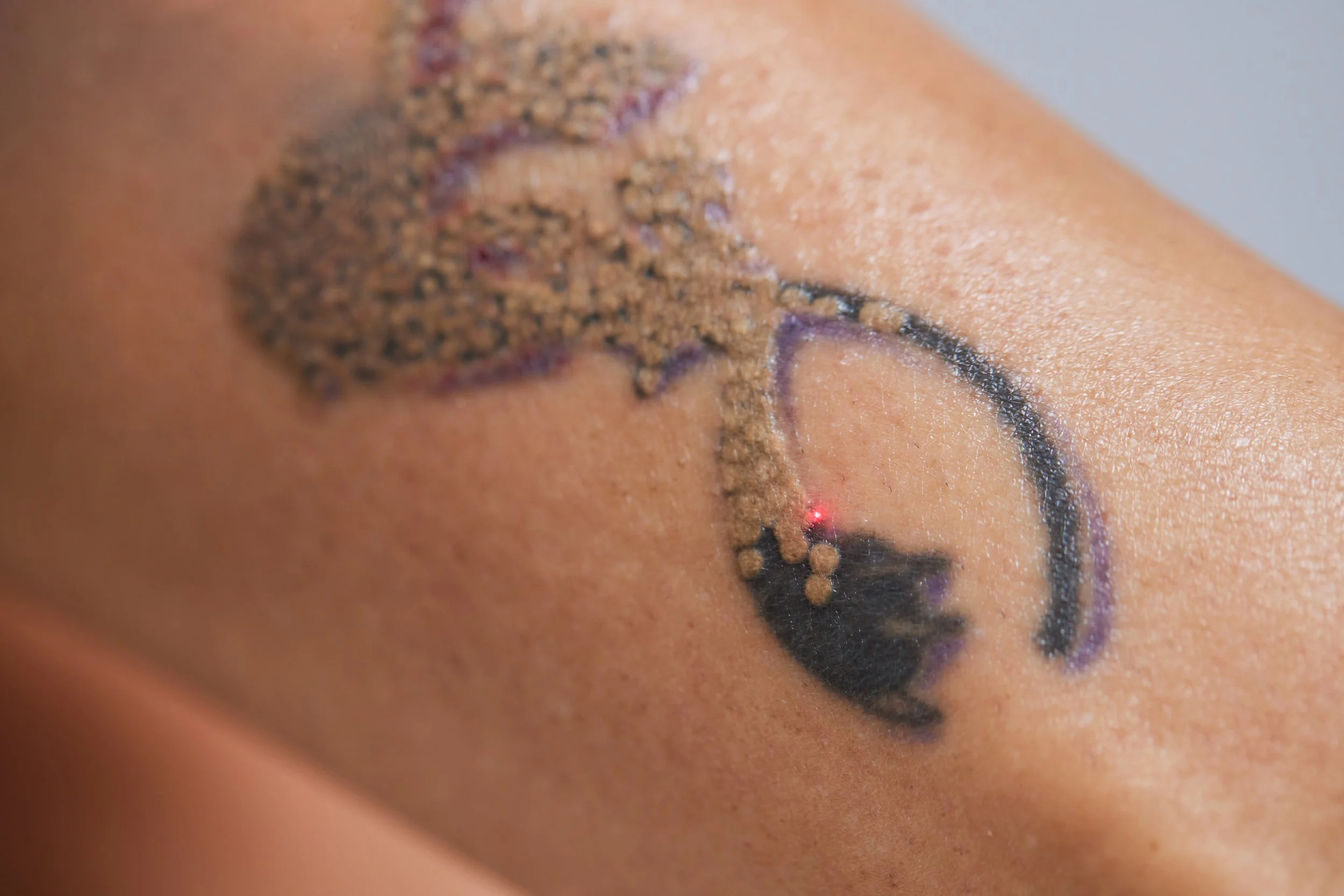
The risk is not zero. Picking at blisters or scabs, sun exposure on healing skin, and a personal history of keloids or raised scars all increase it. Some tattoos also have scarring from the original tattooing that only becomes visible as the ink fades. Temporary lightening or darkening of the treated skin can occur, particularly in deeper skin tones, and usually improves with time. Your provider reviews your individual risk with you before treatment begins.
When laser tattoo removal is performed with appropriate settings and the skin is cared for properly afterward, scarring is uncommon. The laser targets the ink rather than the surrounding skin, and spacing sessions far enough apart gives the skin time to heal fully between treatments.
What to expect
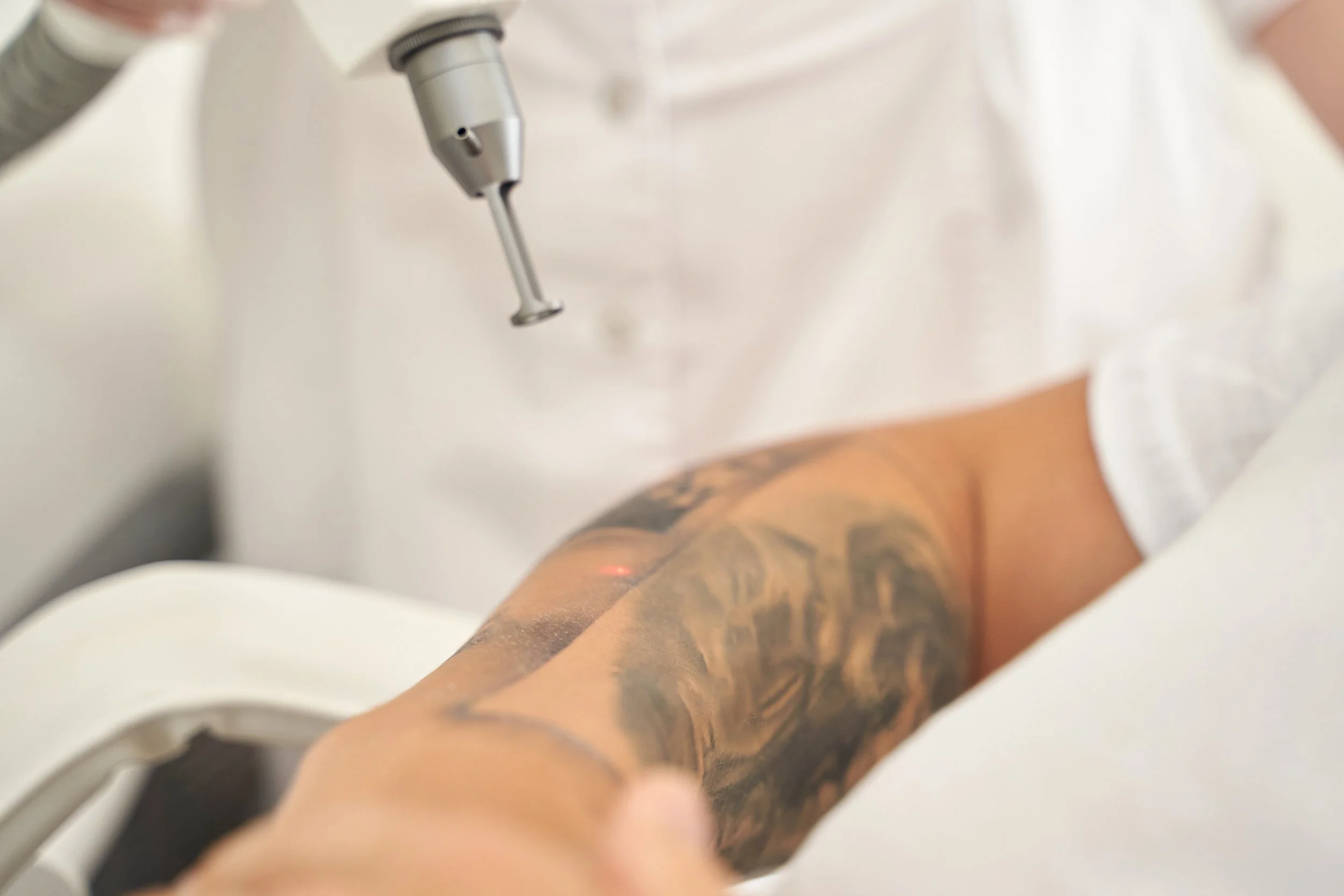
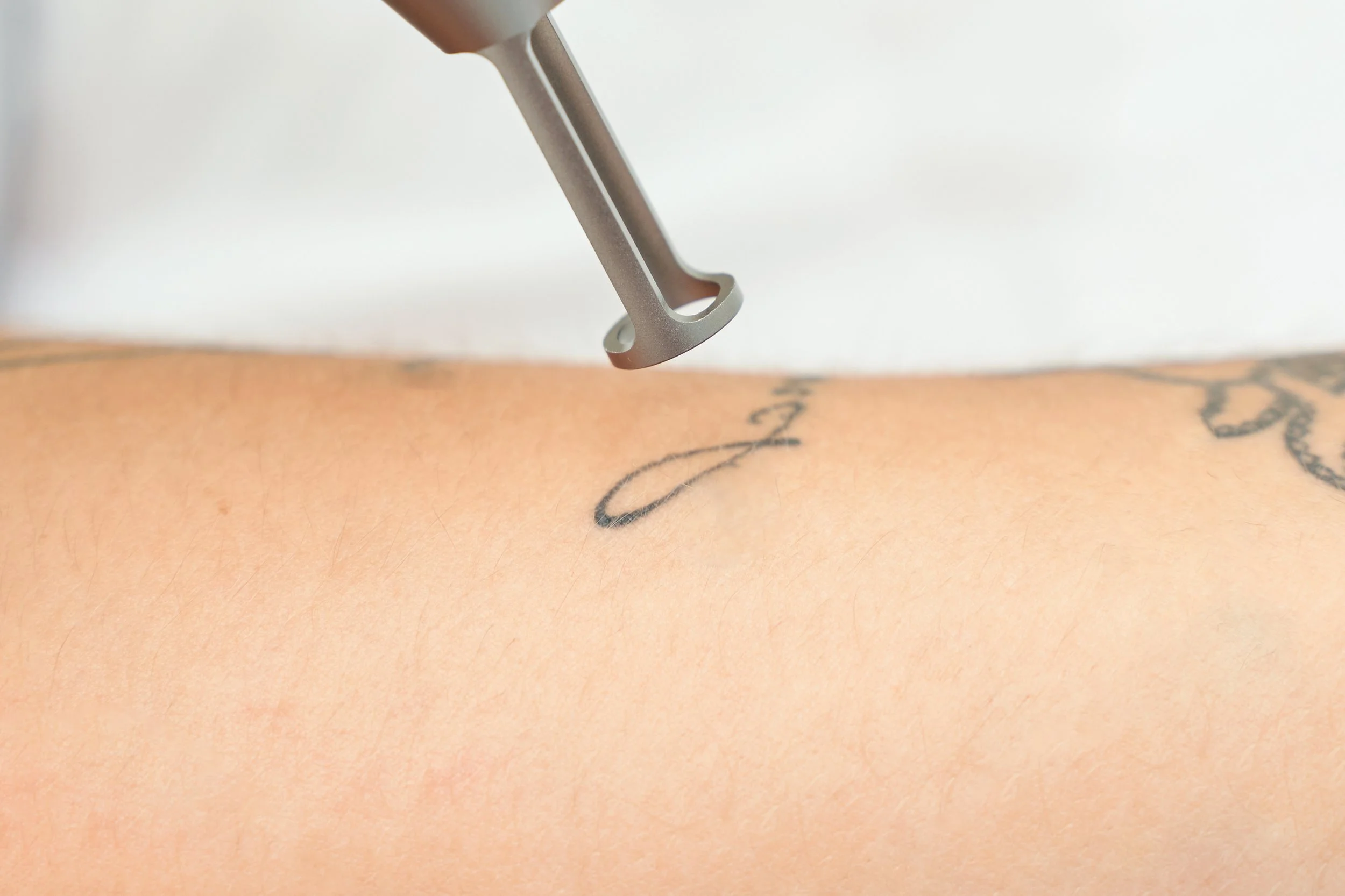
Treatment begins with an evaluation of your tattoo and your skin to determine whether laser removal is appropriate and roughly how many sessions to plan for. Sessions themselves are quick. A small tattoo can take just a few minutes, and larger pieces take longer.
During treatment, you will wear protective eyewear. Most patients describe the sensation as a rubber band snapping against the skin. A provided cooling device can be used for comfort. Afterward, the area is typically red, swollen, and tender, similar to a sunburn. Blistering, scabbing, and pinpoint bleeding can occur and are part of normal healing. You will receive tattoo removal aftercare instructions, which generally include keeping the area clean and covered, not picking at blisters or scabs, and avoiding soaking the area until it heals.
Sun protection is not optional. Tanned or sunburned skin cannot be treated safely, and sun exposure on healing skin raises the risk of pigment changes. Keep the area covered or protected with broad-spectrum SPF between sessions.
Your results
Fading is gradual. The tattoo continues to lighten in the weeks after each session as your body clears the ink, and sessions are typically spaced at least four to six weeks apart. Most tattoos need a series of treatments. The number depends on the ink colors, how dense and deep the ink is, the age of the tattoo, its location, and how your skin responds.
It is important to have realistic expectations. Many tattoos can be removed or faded to the point they are hard to see, but complete removal cannot be guaranteed for every tattoo. Some colors are resistant, and a faint shadow of the design or a slight change in skin texture or color can remain. If your goal is a cover-up rather than full removal, fewer sessions are usually needed.
Frequently asked questions
-
Laser tattoo removal uses short pulses of light to break tattoo ink into smaller particles. Your body then clears those particles over the following weeks, and the tattoo fades gradually over a series of sessions.
-
Cost depends on the size of the tattoo, the ink colors, and how many sessions it needs. Tattoo removal is a cosmetic procedure and is not covered by insurance. The clearest way to get a number is a consultation, where we look at your tattoo and give you a personalized plan and quote.
-
Most tattoos need a series of sessions rather than one visit. The number depends on the colors, density, depth, and age of the ink, where the tattoo is on your body, and how your skin responds. It is estimated for you at your evaluation.
-
Most patients compare it to a rubber band snapping against the skin. Sessions are short, and a cooling device can be used to keep you comfortable.
-
Scarring is uncommon when treatment is performed with appropriate settings and aftercare instructions are followed. Picking at healing skin, sun exposure, and a history of keloids raise the risk. Temporary lightening or darkening of the skin can occur and usually improves with time.
-
Keep the area clean and covered as directed, do not pick at blisters or scabs, avoid soaking the area until it has healed, and protect it from the sun. You will receive written instructions at your visit.
-
Black and dark inks usually respond best. Some colors, including certain greens, blues, and yellows, can be harder to clear, and results vary by ink. Your provider will tell you what is realistic for your tattoo at your evaluation.