Laser Hair Removal in Baton Rouge
at Derma
Long-term hair reduction performed in a dermatology practice, with settings chosen for your skin and your hair.

Shaving, waxing, and plucking require ongoing maintenance and can contribute to razor burn, ingrown hairs, and skin irritation. Laser hair removal targets the hair at its root, so that over a series of sessions, the hair grows back finer, lighter, and slower, and in many areas stops growing back at all.
Laser hair removal is safe and effective when the settings match your skin tone and hair color, and that is where treatment in a dermatology practice matters. At Derma, treatment begins with an evaluation of your skin and the areas you want treated to help determine the appropriate approach for your needs.
Call 225-303-9500 to Book Today!
What is Laser Hair Removal?
Laser hair removal uses a concentrated beam of light that is absorbed by the pigment in the hair. The light converts to heat, which travels down the hair shaft and damages the follicle enough to stop or slow future growth, while the surrounding skin is protected.
Because the laser targets pigment, it works best on hair that is darker than the skin around it. Hair also grows in cycles, and the laser only affects follicles in the active growth phase, which is why a series of sessions spaced weeks apart is needed to catch each hair as it cycles.
At Derma, we use the Clarity II laser by Cynosure Lutronic, an advanced laser hair removal system that uses two wavelengths to target unwanted hair. Its dual-wavelength technology allows treatment to be tailored to a variety of different skin tones and hair types. Your provider will determine the appropriate settings based on your skin and hair during your evaluation.
Laser hair removal works on nearly any area of the body except the eye area. Results are best on dark hair. Blonde, red, gray, and white hair contain too little pigment for the laser to target and generally do not respond, which is reviewed with you at your evaluation.
What it Treats:
Patients are commonly evaluated for laser hair removal to address:
Unwanted hair on the face, including the upper lip, chin, and jawline
Underarms
Bikini line and Brazilian
Legs, arms, and hands
Back, chest, and shoulders
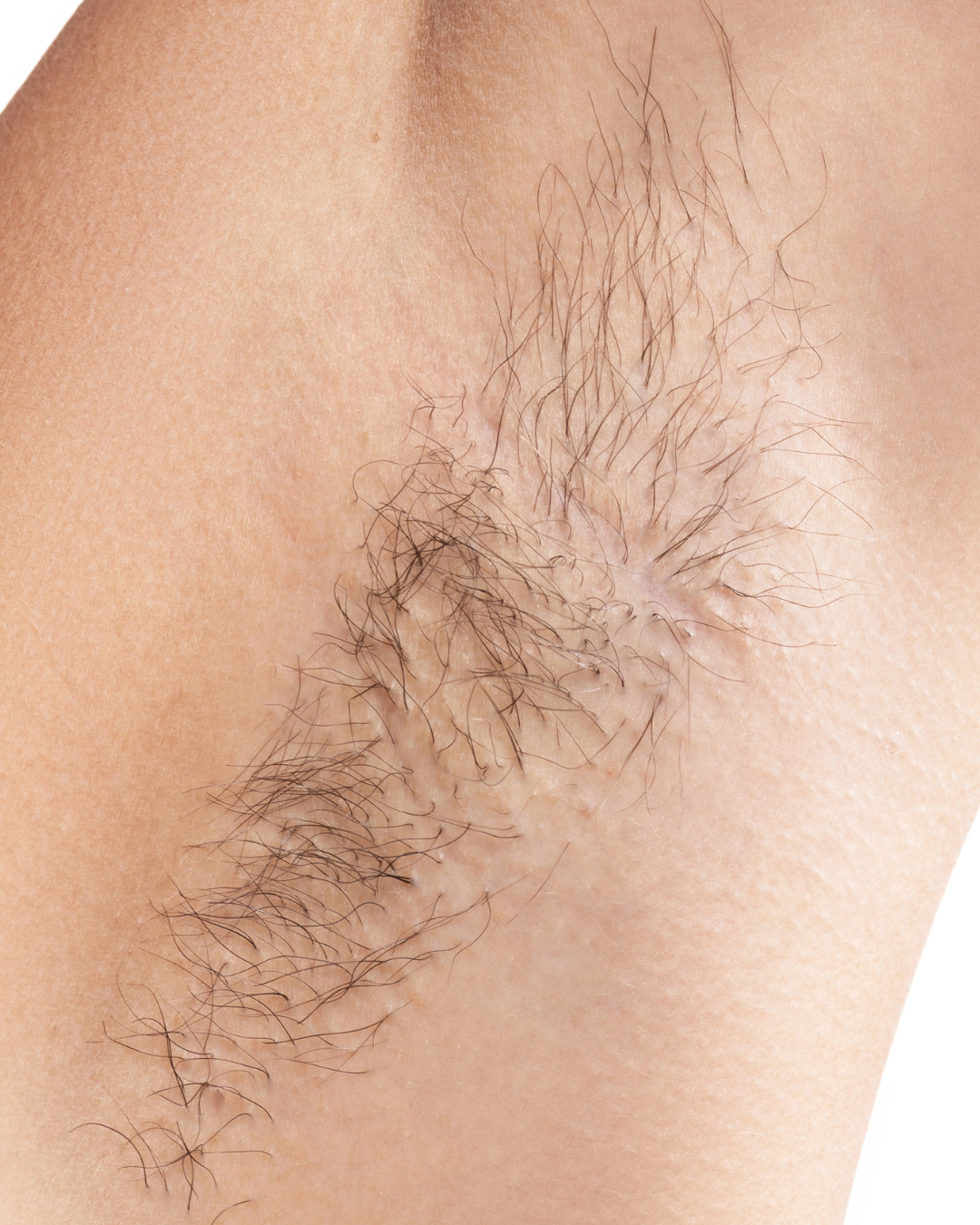
Ingrown hairs and razor bumps (folliculitis) from shaving
Excess hair growth linked to hormonal conditions such as PCOS
Why Choose Laser Hair Removal at Derma
Laser hair removal is offered at spas, salons, and chains, and the difference between a good result and a burn comes down to the settings and the person choosing them. Skin tone, recent sun exposure, hair color, and certain medications all change what is safe. At Derma, those decisions are made in a dermatology practice by a team that treats skin every day.
This individualized approach is particularly important for patients with sensitive skin, recurring razor bumps, or concerns about how their skin may respond to treatment. By considering the condition of the skin alongside unwanted hair, the team can help determine whether laser hair removal is an appropriate option.

Laser Hair Removal for
Dark Skin
Laser hair removal may be appropriate for patients with deeper skin tones, provided the device and treatment settings are suitable for their skin. Because laser energy interacts with pigment, selecting the appropriate technology and settings is important for reducing the risk of burns and unwanted pigment changes. Your evaluation allows the team to assess your skin tone, hair characteristics, and treatment area before determining whether laser hair removal is appropriate.
What to expect
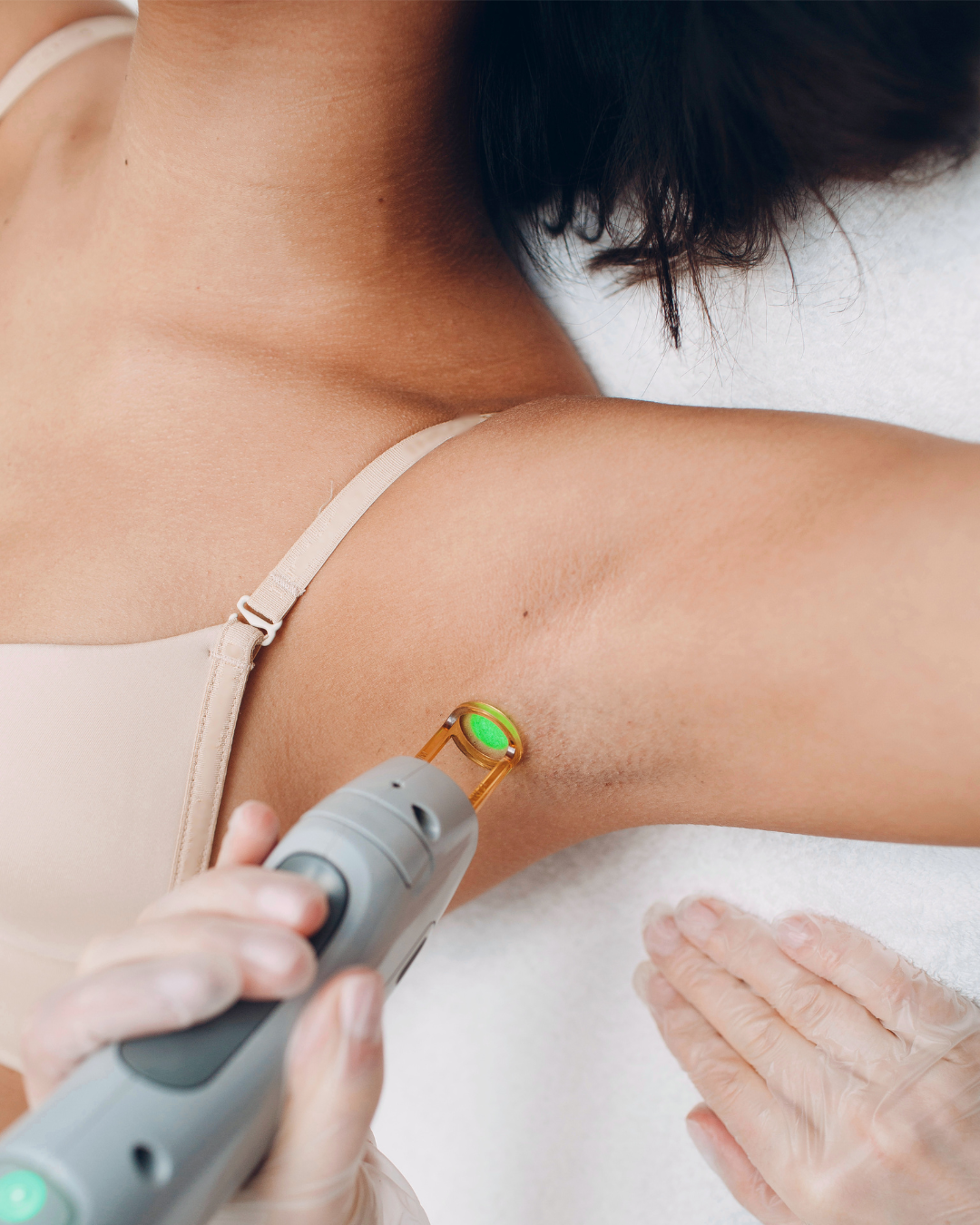
Treatment begins with an evaluation of your skin and hair and a review of your history, including recent sun exposure, tanning, and any medications that increase light sensitivity. Before each session, shave the area within 24 hours, and do not wax, pluck, or thread for four to six weeks beforehand, since the laser needs the hair root in place to work. Arrive with clean skin and follow your provider's instructions regarding lotions, deodorant, makeup, and other products on the treatment area.
During treatment, you will wear protective eyewear. The Clarity II laser has built-in cooling, and the sessions are generally painless. A small area such as the upper lip takes a few minutes, and larger areas such as the legs or back may take up to 20 minutes. Afterward, the skin is usually pink around the hair follicles treated. hairs shed over the following one to three weeks, which can look like regrowth at first.
Sun protection is not optional. Tanned or sunburned skin cannot be treated safely, and sun exposure on treated skin raises the risk of pigment changes. Keep the area covered or protected with broad-spectrum SPF between sessions.
Your results
Hair grows in cycles, so results build over a series. Most areas need six to eight sessions spaced four to eight weeks apart, with the face treated more often and the body less often. After each session you will notice less hair, finer hair, and slower regrowth. Follow your provider's guidance on sun avoidance, protective clothing, and broad-spectrum sunscreen between sessions.
It is important to have realistic expectations. Laser hair removal is best described as long-term hair reduction rather than permanent removal. Some hairs can return over time, especially with hormonal changes, and many patients come in for occasional maintenance treatments that may be recommended to help sustain results.
Frequently asked questions
-
The laser sends a concentrated beam of light that is absorbed by the pigment in the hair and converts to heat, which damages the follicle and stops or slows future growth. Because hair grows in cycles, a series of sessions is needed to treat each follicle in its active phase.
-
It is best described as long-term hair reduction. After a full series, most patients see a significant, lasting reduction, with any regrowth finer and lighter. Some hair can return over time, especially with hormonal changes, and an occasional maintenance session keeps the area clear.
-
Cost depends on the size of the area and the number of sessions. Small areas such as the upper lip cost less per session than large areas such as the legs or back, and a package for the full series is usually the best value. Laser hair removal is cosmetic and not covered by insurance. The clearest way to get a number is an evaluation, where we look at your skin and hair and give you a personalized plan and quote.
-
Most patients compare it to a quick snap followed by a burst of cooling. Sensitive areas such as the bikini line and upper lip feel more intense than the legs or arms. Sessions are short, and the built-in cooling keeps you comfortable.
-
Most areas need six to eight sessions spaced four to eight weeks apart. The number depends on the area, your hair color and thickness, and how your hair responds. It is estimated for you at your evaluation.None. HydraFacial is gentle enough that you can return to your day right away, including makeup, and there is no redness or peeling to recover from.
-
Yes, with the right device and settings. Deeper skin tones absorb more laser energy, so a wavelength that targets the follicle rather than the skin's pigment, conservative settings, and a test spot are used. Your evaluation covers what is safe for your skin tone.
-
Shave the area within 24 hours of your session. Do not wax, pluck, or thread for four to six weeks beforehand. Avoid sun exposure and tanning for two weeks before and after each session, and come in with clean skin, free of lotion, deodorant, or makeup on the treatment area.
-
Yes. Ingrown hairs and razor bumps happen when shaved hair curls back into the skin. Laser hair removal reduces the hair itself, so there is less to grow back in, and it is one of the most effective treatments for chronic razor bumps on the beard area, bikini line, and legs.