Pulsed Dye Laser
in Baton Rouge
at Derma
A vascular laser that treats the cause of persistent facial redness, not just the appearance of it, performed under the care of a board-certified dermatologist.
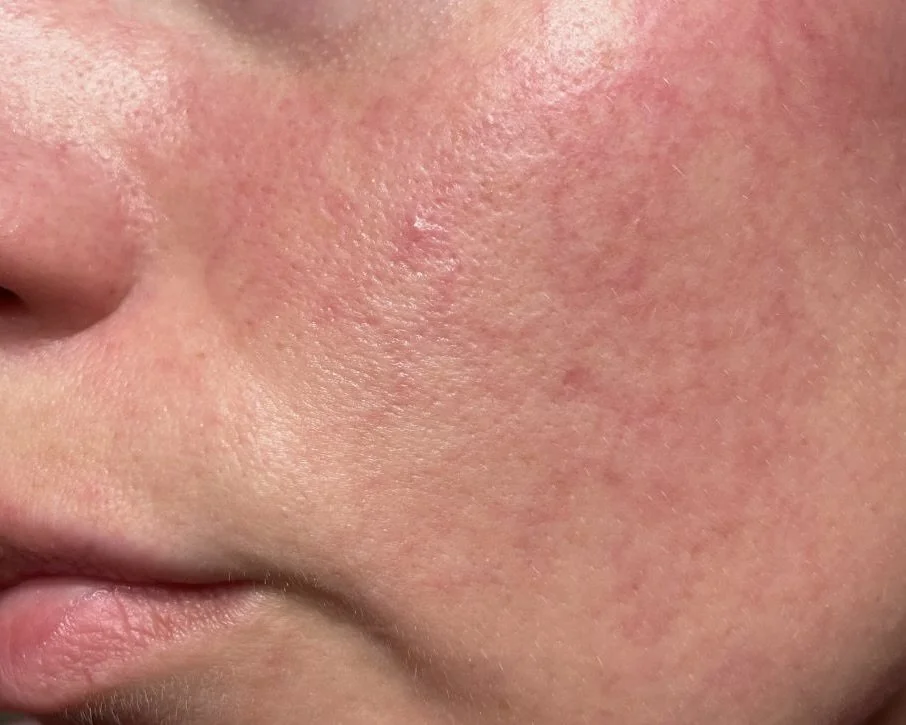
Persistent facial redness can have several causes. If redness remains between flare-ups or you notice small visible blood vessels across your cheeks, nose, or chin, pulsed dye laser may be an effective treatment option.
PDL is a vascular laser designed to target the blood vessels responsible for visible redness that topical treatments may not resolve. At Derma, treatment begins with a skin evaluation to determine what is contributing to your redness and whether PDL is appropriate for your skin.
Call 225-303-9500 to Learn more!
What is Pulsed Dye Laser?
Pulsed dye laser, or PDL, is a vascular laser that uses concentrated light energy to target small blood vessels beneath the skin. The laser's energy is absorbed by hemoglobin within those vessels, allowing the treatment to selectively target vascular concerns while minimizing impact on the surrounding skin.
Following treatment, the targeted vessels are gradually cleared by the body over the following weeks. Because PDL directly addresses the vascular component of redness, it can be particularly useful for concerns that topical skincare alone cannot treat.
Not every red face is rosacea, and not every redness responds to laser. Several conditions can look similar on the surface, so treatment begins with an evaluation to determine the cause of your redness and whether PDL is appropriate.
What it Treats:
Patients are commonly evaluated for pulsed dye laser to address:
Persistent facial redness that remains between rosacea flare-ups
Visible broken capillaries and small blood vessels, often across the cheeks, nose, and chin
Flushing and background redness that skincare has not improved
Cherry angiomas and other benign vascular lesions
Red or raised scars, including some surgical scars
Port wine stains and other vascular birthmarks
Why Choose Pulsed Dye Laser
at Derma
Not every type of redness requires the same treatment. Pulsed dye laser is specifically designed to target blood vessels, making it an effective option when visible redness or vascular concerns are contributing to the appearance of the skin.
At Derma, treatment begins with an evaluation by a dermatologist to determine what is causing your redness and whether PDL is the appropriate approach. This allows your treatment plan to be based on your skin's underlying concerns rather than a one-size-fits-all approach.
Laser treatment for rosacea
Rosacea is a chronic inflammatory condition, and it has two parts that behave differently. The flare-ups, the bumps, and the inflammation are often managed with topical or oral medication and trigger avoidance. The persistent background redness and the visible vessels are vascular, and that is the part laser treatment for rosacea is designed to address.This is why many rosacea treatment plans combine both. Medical management works on the inflammation, and pulsed dye laser works on the vessels, while trigger awareness and gentle skincare support the results between visits. Your dermatologist will recommend the combination that fits your skin, your symptoms, and how your rosacea has behaved over time.

What to expect
Treatment begins with an evaluation to confirm the diagnosis and determine whether pulsed dye laser is appropriate for you. If it is, a typical session takes roughly 15 to 30 minutes depending on the area being treated.
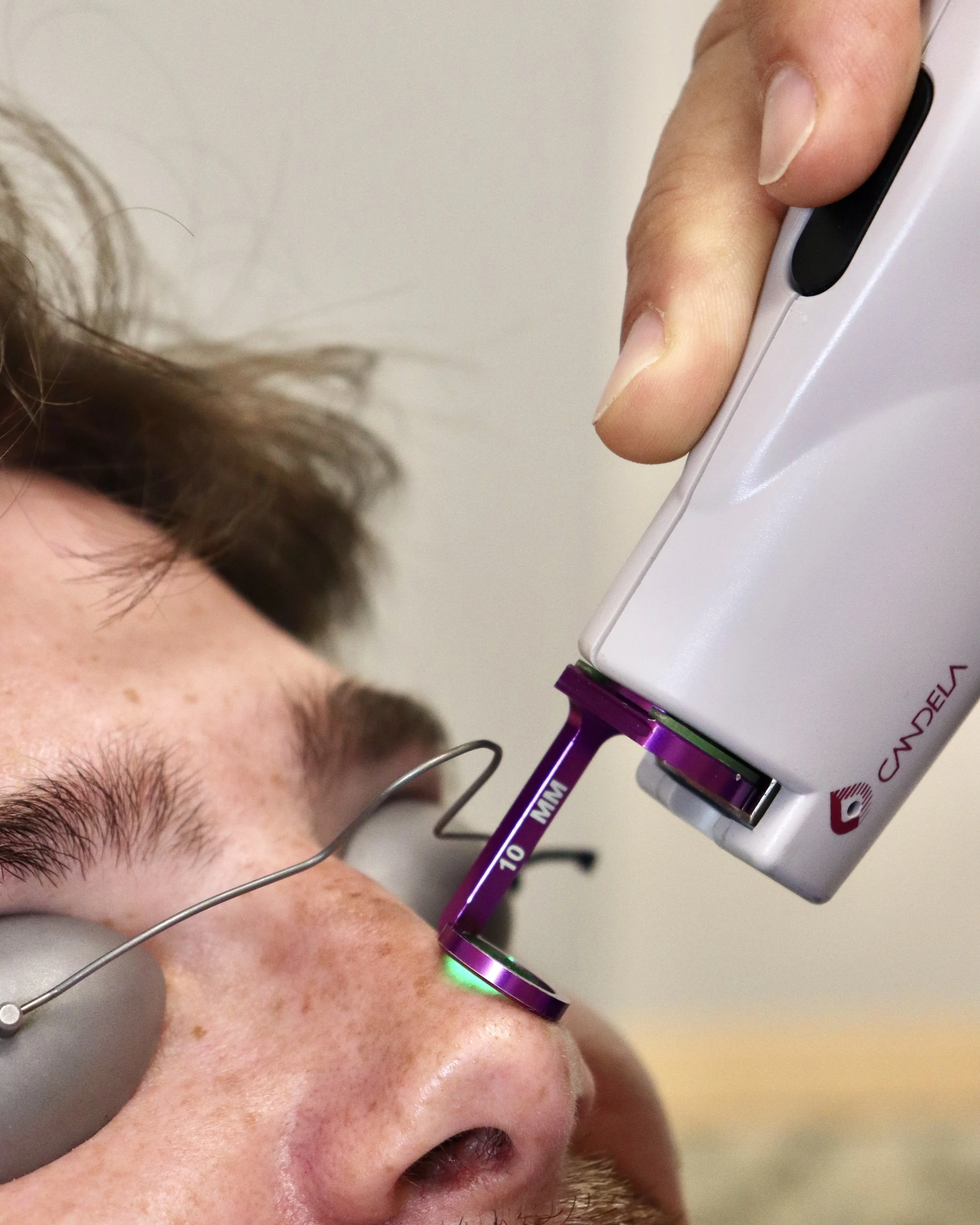
During treatment, you will wear protective eyewear. Most patients describe the sensation as a quick snap against the skin followed by a cooling burst. A topical numbing cream can be applied beforehand for comfort. Afterward the treated area is usually pink or slightly swollen for a day or two. Depending on the settings used, some patients experience temporary bruising that resolves over about a week, and that is discussed with you in advance so you can plan around events.
Sun protection afterward is not optional. Daily broad-spectrum SPF protects the treated skin and supports your result.
Your results
Improvement is gradual rather than immediate. Treated vessels clear over the following weeks, and most patients need a series of sessions spaced several weeks apart rather than a single visit. The number depends on the extent of the redness and how your skin responds.
It is important to have realistic expectations. Pulsed dye laser can meaningfully reduce persistent redness and visible vessels, but it is not a cure for rosacea. Rosacea is chronic, new vessels can develop over time, and many patients continue with trigger avoidance, skincare, and periodic maintenance treatments to hold their results. Your dermatologist will build a maintenance plan around your skin rather than a fixed schedule.
Frequently asked questions
-
Pulsed dye laser is a vascular laser that targets the small blood vessels beneath the skin that cause persistent redness. The energy is absorbed by the blood vessels while sparing surrounding skin, and the treated vessels are cleared by the body over the following weeks.
-
Laser treatment can significantly reduce persistent redness and visible blood vessels, but it does not cure rosacea. Because rosacea is a chronic condition, maintenance treatments and continued management may be recommended over time.
-
Cost depends on the size of the area treated and how many sessions your skin needs. Some vascular conditions may be eligible for insurance coverage, which is reviewed during your visit. The clearest way to get a number is an evaluation, where we look at your skin and give you a personalized plan and quote.
-
Most patients need a series of treatments spaced several weeks apart rather than one session. The number depends on how extensive the redness is and how your skin responds, and it is estimated for you at your evaluation.
-
Most patients describe a quick snapping sensation with a cooling burst, and the treatment is generally well tolerated. Topical numbing cream can be applied beforehand if you prefer.Yes. The deep cleanse and gentle extraction help clear congested pores, and Jen can select serums suited to oily or breakout-prone skin. She will confirm it is the right fit at your visit.
-
The treated area is typically pink or slightly swollen for a day or two. Depending on the settings used, temporary bruising can occur and usually resolves within about a week. This is discussed with you beforehand so you can plan around events.Many people do best with a treatment about once a month to maintain clear, hydrated skin, though Jen will tailor the timing to your skin and your goals.
-
Yes. Visible broken capillaries and small facial blood vessels are among the most common reasons patients are evaluated for pulsed dye laser, because those vessels are exactly what the laser is designed to target.